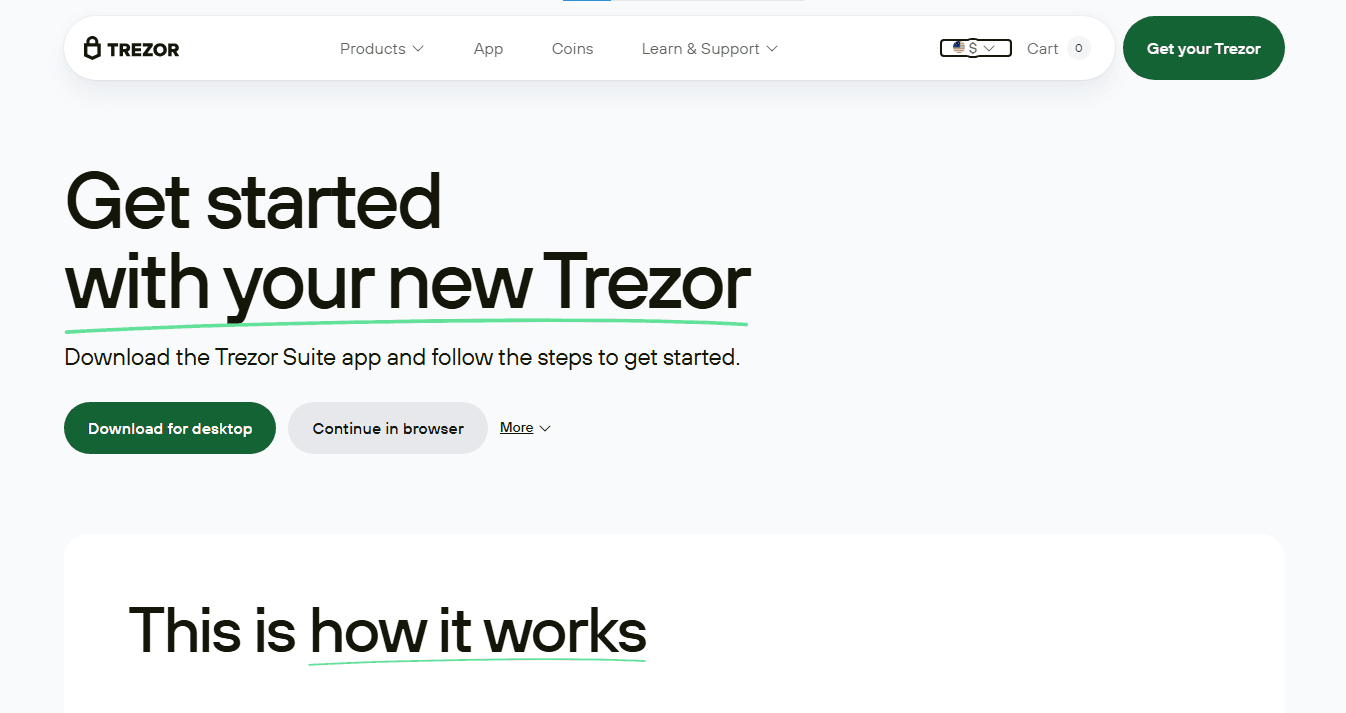
Trezor.io/Start —
Cryptocurrency ownership demands strong, uncompromising security—and this is where Trezor hardware wallets stand out. Whether you’re protecting long-term Bitcoin savings, managing a diverse altcoin portfolio, or simply transitioning from a software wallet to a hardware wallet for better security, everything begins at one place: Trezor.io/start.
This official onboarding page ensures your device is initialized correctly, that you download authentic software, and that your wallet is set up with maximum security.
In this comprehensive, 1800+ word guide, you will learn:
What Trezor.io/start is
How to set up your device step-by-step
How to install firmware and create a secure wallet
How to protect and store your recovery seed
What Trezor Suite offers
Supported cryptocurrencies
What security features you should enable
How to send, receive, and manage crypto
Troubleshooting and expert best practices
By the end, you’ll be fully prepared to use your Trezor wallet safely and confidently.
What Exactly Is Trezor.io/Start?
Trezor.io/start is the official and only device-setup portal for all Trezor hardware wallets, including:
Trezor Safe 3
Trezor Model T
Trezor Model One
The page helps new users:
Install the Trezor Suite desktop application
Set up or recover a Trezor wallet
Install essential device firmware
Create a recovery seed
Learn basic security rules
Using the official onboarding page protects you from fake software, malicious downloads, and phishing attacks—common threats in the crypto space.
Why Trezor.io/Start Is Important for New Users
Setting up a hardware wallet incorrectly can expose you to security risks. For example:
Downloading fake wallet software can lead to fund theft
Installing firmware from unofficial sources can compromise your device
Receiving a pre-filled recovery phrase means the wallet is already hacked
To avoid these dangers, Trezor.io/start ensures that:
✔ You download the authentic Trezor Suite
✔ You install firmware directly from Trezor
✔ You follow secure steps to generate your seed phrase
✔ You confirm the device is genuine
This official onboarding pathway exists to prevent the most common mistakes made by new hardware wallet users.
Unboxing Your Trezor: What You Should Check Before Starting
Before visiting Trezor.io/start, carefully inspect the device box and contents. This is an important step that many beginners overlook.
What to check during unboxing:
1. Packaging Integrity
A genuine Trezor device should have intact packaging with no signs of tampering, resealing, or punctures.
2. Device Condition
Your wallet should look new, not scratched or previously opened.
3. No Pre-Written Seed Phrase
Trezor never ships seed phrases.
If a seed phrase is included in the box, it’s a scam—return the device immediately.
4. Included Accessories
Depending on the model, you should typically see:
USB-C or micro USB cable
Manuals or welcome cards
Trezor stickers
Scratch-off recovery cards
If everything looks correct, you’re ready to begin setup via Trezor.io/start.
How to Set Up Your Trezor Wallet Using Trezor.io/Start (Step-by-Step)
Below is a detailed and beginner-friendly walkthrough of the entire setup process.
Take your time—wallet security is not something to rush.
Step 1 — Connect Your Trezor to Your Computer
Use the USB cable included with the device to connect it to your computer.
Once connected, the device should power on and display a welcome message.
If the screen remains black:
Try another USB port
Switch cables
Restart the computer
Once connected properly, you’re ready for step two.
Step 2 — Visit Trezor.io/Start and Download Trezor Suite
Now open your web browser and manually type:
Trezor.io/start
Never follow links from emails or social media—you must type the URL yourself to avoid phishing scams.
On the page, you will see download links for Trezor Suite, the official desktop application used for:
Managing your crypto
Issuing transactions
Viewing assets
Connecting to your Trezor
Trezor Suite supports:
Windows
macOS
Linux
Download the version for your operating system and install it.
Step 3 — Install or Update Firmware on Your Device
Trezor devices ship without firmware preinstalled.
This is a deliberate security measure that ensures firmware is downloaded directly from Trezor and not manipulated in transit.
When you launch Trezor Suite for the first time, it will prompt you to install firmware.
Steps:
Click Install Firmware
Wait for installation to complete
Allow the device to restart
Do not unplug the device during firmware installation.
Step 4 — Create a New Wallet or Recover an Existing One
Once the firmware is installed, you must choose one of two options:
Option A: Create a New Wallet
Recommended if this is your first hardware wallet.
This process will generate a new recovery seed—the most important part of wallet ownership.
Option B: Recover Wallet from Seed Phrase
This option is used if:
Your previous Trezor was lost or damaged
You are restoring your wallet on a new device
Recovery happens directly on the device screen, keeping your seed secure.
Understanding Your Recovery Seed — The Core of Your Crypto Security
Your recovery seed—also called your seed phrase, backup phrase, or mnemonic phrase—is the master key to your entire wallet.
This phrase is usually 12, 18, or 24 words long, depending on your setup.
Important Rules for Seed Phrases
🔒 1. Never Store Your Seed Digitally
No screenshots
No photos
No copy-paste notes
No cloud storage
Digital storage is vulnerable to hacking.
🔒 2. Write It Down Clearly on Paper (or Metal)
Use the cards provided or a metal backup plate for long-term durability.
🔒 3. Never Share It with Anyone
Not with friends, not with “support staff,” not with websites.
🔒 4. Trezor Will Never Ask for It
The device and company never request your seed phrase.
🔒 5. Store It in Multiple Secure Locations
Fireproof safes, safety deposit boxes, or secure off-site storage are ideal.
Losing your seed means losing access to your crypto—forever.
Step 5 — Set a Strong PIN for Device-Level Security
After writing down your seed, Trezor Suite will prompt you to set a device PIN.
This PIN is required every time the device powers on or approves a transaction.
Tips for Creating a Strong PIN:
Avoid simple patterns like 1111 or 1234
Use a long PIN if allowed
Never write your PIN on the device or its packaging
Do not reuse passwords from other accounts
If someone attempts to guess your PIN repeatedly, the device will automatically wipe itself.
Step 6 — Complete Setup and Open the Trezor Suite Dashboard
With your wallet created, your seed secured, and your PIN set, you’ll now access the Trezor Suite dashboard, where you can:
View your portfolio
Send and receive cryptocurrency
Manage multiple accounts
Monitor transaction history
Buy, swap, or sell crypto (depending on region)
Enable advanced security features
The dashboard is clean, organized, and user-friendly—making Trezor a great option for both beginners and experts.
What Cryptocurrencies Does Trezor Support?
While support varies by model and firmware, Trezor generally supports 1,500+ coins and tokens, including:
Major Coins:
Bitcoin (BTC)
Ethereum (ETH)
Litecoin (LTC)
Bitcoin Cash (BCH)
Dogecoin (DOGE)
EVM Assets & Tokens:
ERC-20 tokens
Polygon
Binance Smart Chain tokens
Newer Networks (varies by model):
Cardano (ADA)
Solana (SOL)
Polkadot (DOT)
Monero (XMR) — limited support via external wallets
Trezor Suite continues to expand compatibility regularly.
How to Receive Crypto Using Your Trezor
Receiving funds safely is just as important as sending them.
Steps to receive crypto:
Open Trezor Suite
Select the account (e.g., Bitcoin)
Click Receive
Generate an address
Confirm the address on your Trezor device
Share the address
Always verify the address on the device screen to ensure malware hasn’t altered it.
How to Send Crypto Using Your Trezor
Sending crypto with Trezor involves a verification process that protects your private keys.
Steps to send crypto:
Go to the Send tab
Enter the recipient address
Choose the amount
Select a fee level (low, normal, high)
Confirm the transaction on your Trezor device
Your private keys never leave your hardware wallet—only a signed transaction is transmitted to the blockchain.
Advanced Security Features After Setup
Once your Trezor wallet is fully set up, you can enhance security with additional features.
Passphrase Security (Hidden Wallets)
A passphrase creates a completely separate, hidden wallet.
Each unique passphrase produces a new wallet.
This feature is ideal for:
Serious investors
Holders of large crypto amounts
Users who want “plausible deniability”
If someone steals your device and seed phrase but not your passphrase, they still cannot access your funds.
Shamir Backup (Model T Only)
This feature splits your seed phrase into multiple parts (shares), and you define how many are required to recover the wallet.
Example: create 3 parts, require 2 to unlock.
This protects you from seed loss due to accidents, disasters, or theft.
Tor for Enhanced Privacy
Trezor Suite allows users to route connections through Tor, masking their IP address and protecting privacy.
Coinjoin (BTC Privacy)
A privacy-enhancing tool that helps mix Bitcoin transactions to obscure ownership patterns.
Troubleshooting Common Setup Problems
Even with a simple setup, some users encounter issues. Here’s how to solve the most common ones.
Device Not Being Recognized
Try another USB cable
Use a different port
Reopen Trezor Suite
Update your operating system
Firmware Installation Fails
Reconnect device
Enter bootloader mode manually
Restart computer
Trezor Suite Stuck on “Waiting for Confirmation”
Confirm directly on device
Ensure touchscreen or buttons are working
Wallet Recovery Issues
Check seed phrase spelling
Confirm the correct word order
Verify you're using the right recovery type (12, 18, or 24 words)
Best Practices for Long-Term Crypto Safety
Owning a hardware wallet means you’re responsible for keeping your crypto safe.
Here are essential long-term practices:
1. Keep Your Seed Phrase in Multiple Secure Locations
Preferably in waterproof, fireproof materials.
2. Never Share Your Seed or PIN
No legitimate source will ask for them.
3. Beware of Fake Websites or Apps
Always type Trezor.io/start manually.
4. Keep Firmware Up-to-Date
Updates strengthen security and expand coin support.
5. Enable a Passphrase for Larger Funds
Adds another protective layer.
6. Double-Check Every Transaction
Always confirm addresses on the device screen.
7. Consider Using Metal Backups
Paper can get damaged—metal backups last much longer.
Is Trezor Safe in 2025?
Yes—Trezor remains one of the most trusted and secure hardware wallets available.
Its open-source approach allows global security experts to review the code, making it more transparent and trustworthy than many closed-source alternatives.
Trezor’s security relies on:
Offline private key storage
Device PIN protection
Seed phrase recovery
Passphrase encryption
Mandatory on-device transaction confirmation
Open-source architecture
Combined with proper user practices, it provides industry-leading security.
Final Thoughts: Trezor.io/Start Is the First Step Toward Safe Crypto Ownership
Visiting Trezor.io/start is the official and safest way to initialize your Trezor hardware wallet. It ensures you download legitimate software, install authentic firmware, and follow correct procedures for creating and backing up your recovery seed.